Xingdi Zhang (张星迪)
About Me
I am a Postdoctoral Researcher at King Abdullah University of Science and Technology (KAUST) and a member of the High-Performance Visualization Group, working with Prof. Markus Hadwiger.
I completed my Ph.D. in Computer Science at KAUST in 2025. My research spans flow visualization, high-performance computing, and AI-driven visual computing, bringing together mathematics and GPU-accelerated engineering.
Email: cindyzhang.yono531@gmail.com
 Google Scholar
Education
King Abdullah University of Science and Technology (KAUST), Saudi Arabia
2020-2025- MS + Ph.D. in Computer Science
- Advisor: Prof. Markus Hadwiger and Dr. Peter Rautek
University of Electronic Science and Technology of China (UESTC), China
2016-2020- B.E. in Computer Science, Yingcai Honor College
- GPA: 3.92/4.0, Rank: top 5%
Research
Mathematical Foundations
I ground my methods in geometry and analysis, treating reference frames and flow structures as objects on smooth manifolds.
- Differential Geometry — vector fields, tensor calculus, Killing fields, and reference frames transformations on curved domains.
- Riemannian Manifolds — we have an ultimate goal is to fully describe observer motions in a space-time manifold as connection.
- Variational Calculus — energy functionals and Euler–Lagrange/Hamilton formulations for extracting objective, frame-invariant features.
High-Performance Computing & Rendering
I translate continuous mathematical models into scalable, parallel implementations that run at interactive rates on modern GPUs.
- C++/OpenGL Rendering — real-time high-performance renderer for interactive exploration of 2D/3D unsteady flow.
- CUDA / GPGPU — I have years of experience in writing custom CUDA kernels for linear algebra operations, sparse solver, parallel pathlines/flow maps/FTLE computation.
- Python/PyTorch —I have worked on machine learning and AI-driven scientific research.
Publications
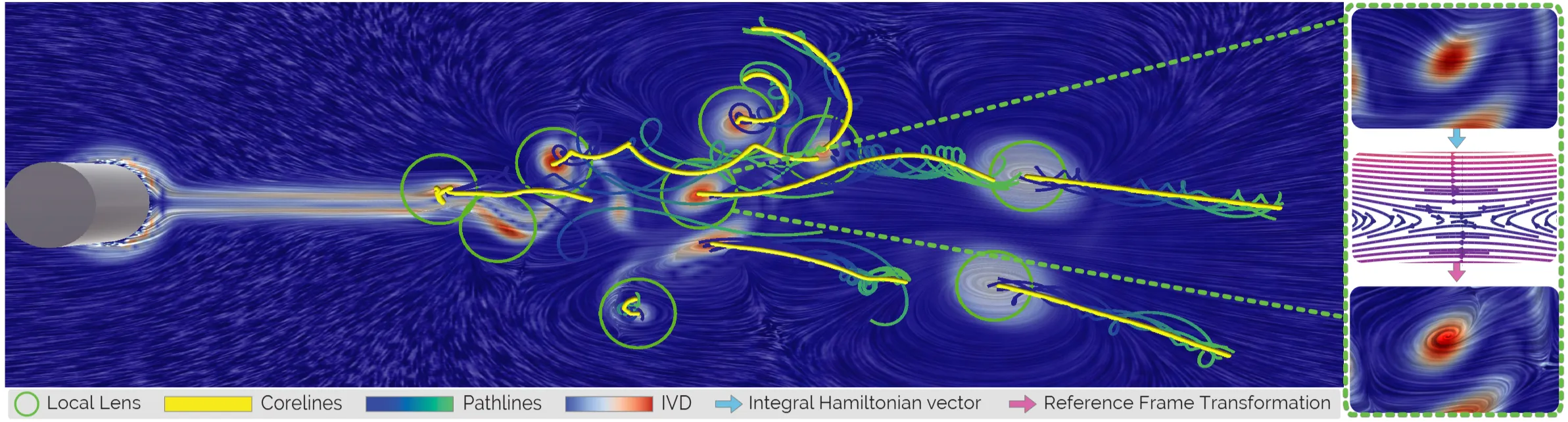
A Generic Lagrangian-Hamiltonian Framework for Optimal Reference Frames in Unsteady Flow
Xingdi Zhang, Amani Ageeli, Thomas Theußl, Peter Rautek, Markus Hadwiger
IEEE Transactions on Visualization and Computer Graphics (Proceedings IEEE VIS 2026), to appear
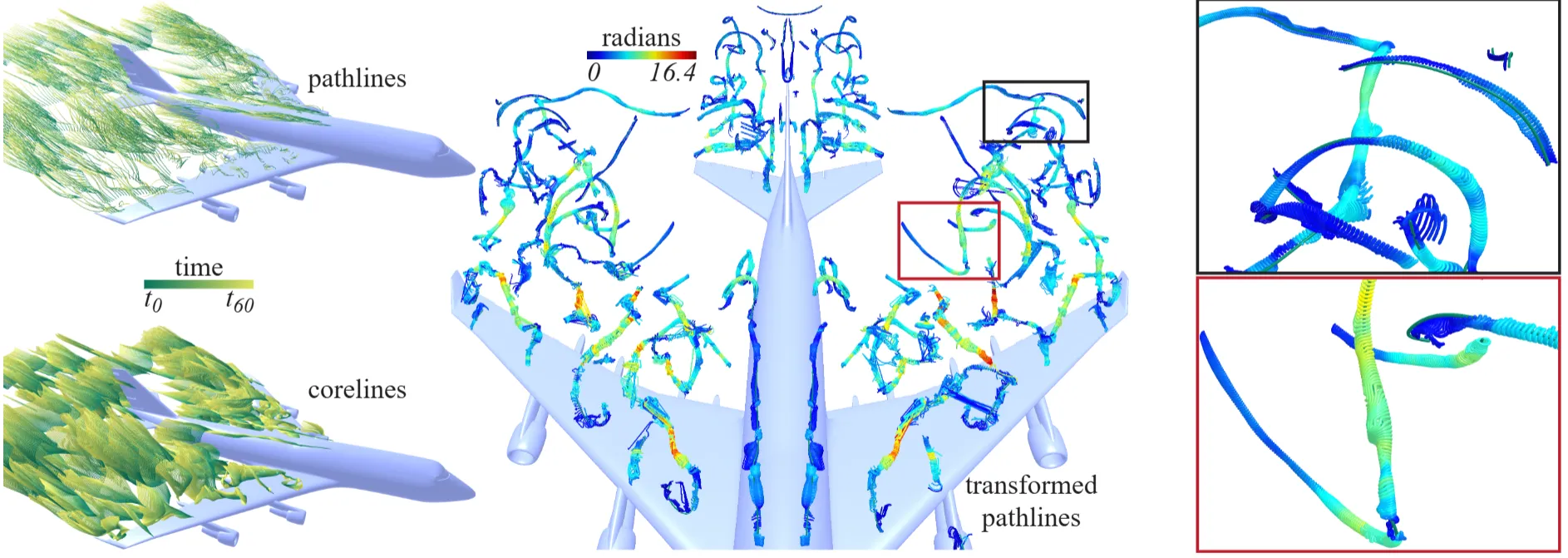
Rotation-Minimizing Space Deformations for the Analysis of Lagrangian Vortex Corelines
Julio Rey Ramirez, Xingdi Zhang, Markus Hadwiger, Peter Rautek
IEEE Transactions on Visualization and Computer Graphics (Proceedings IEEE VIS 2026), to appear
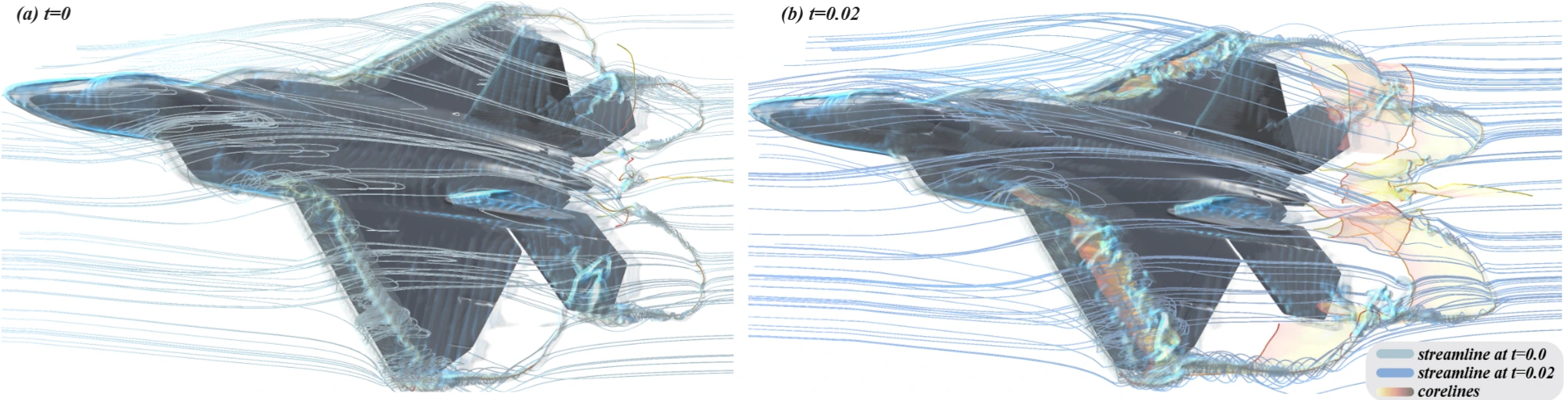
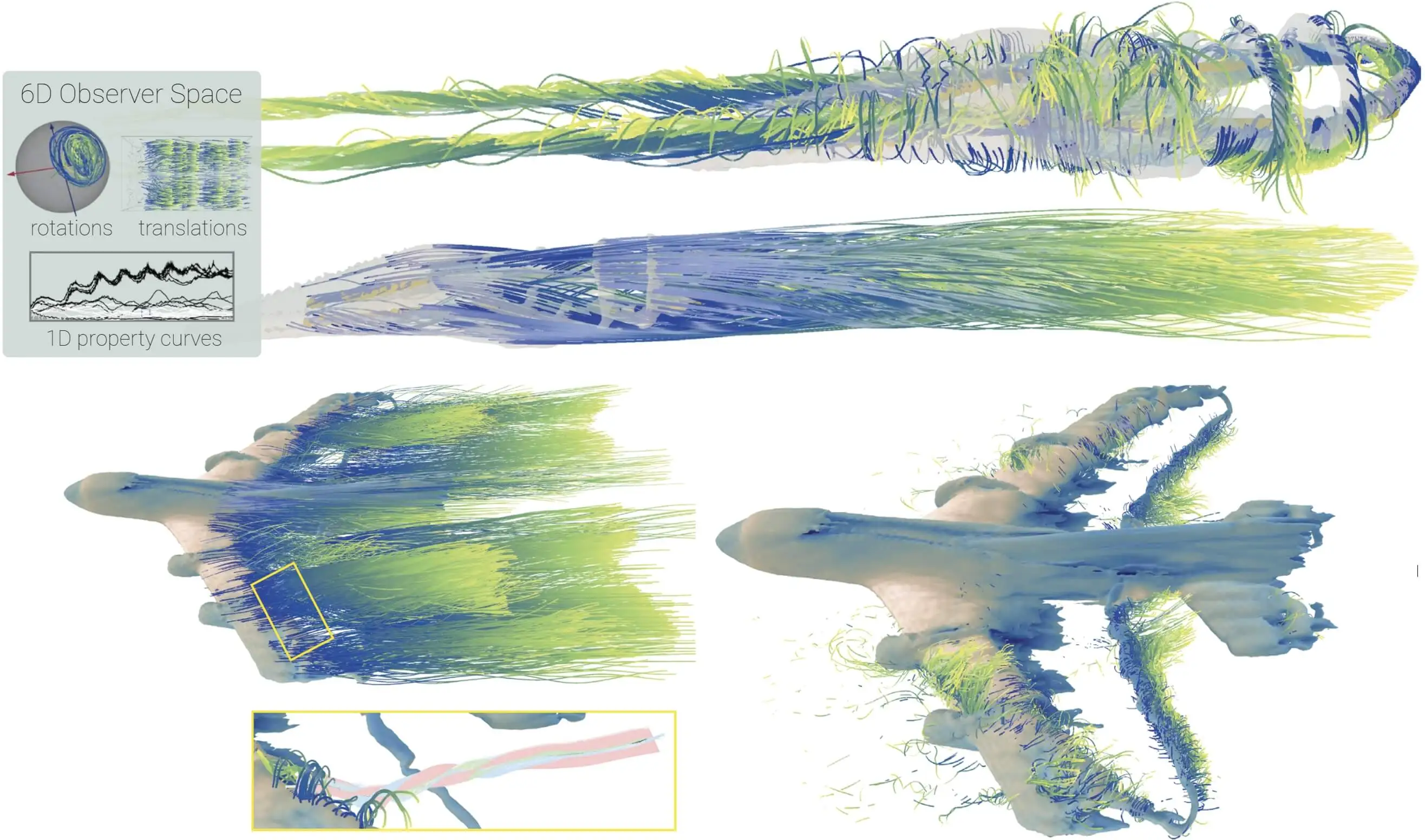
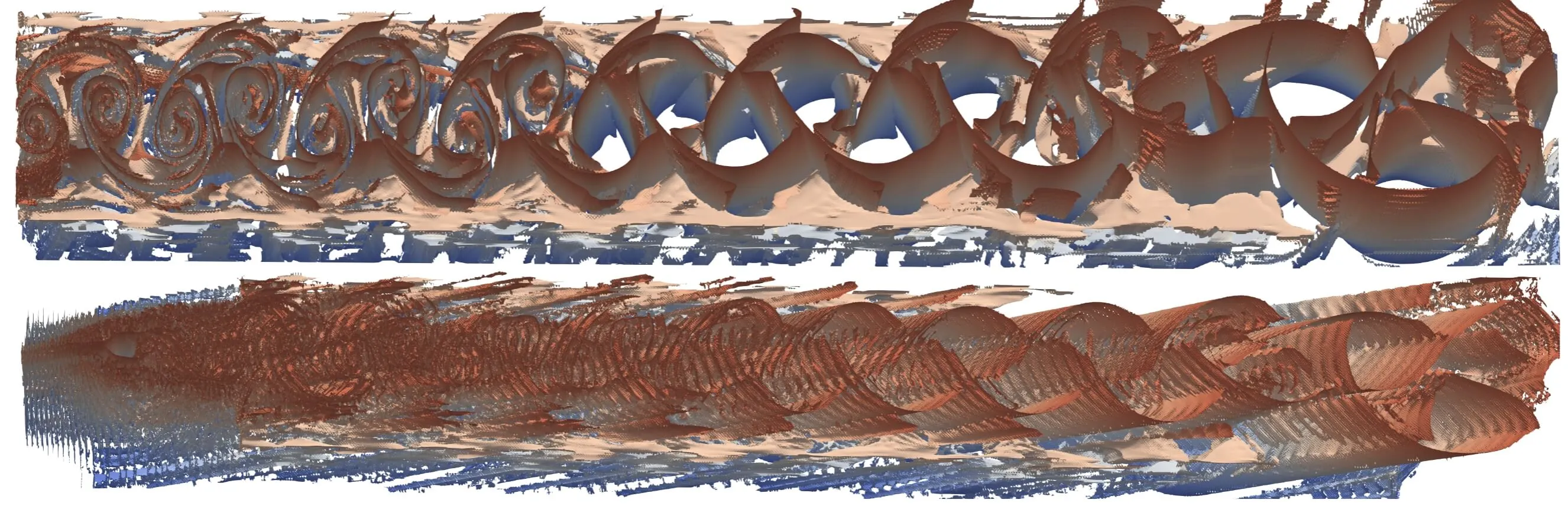
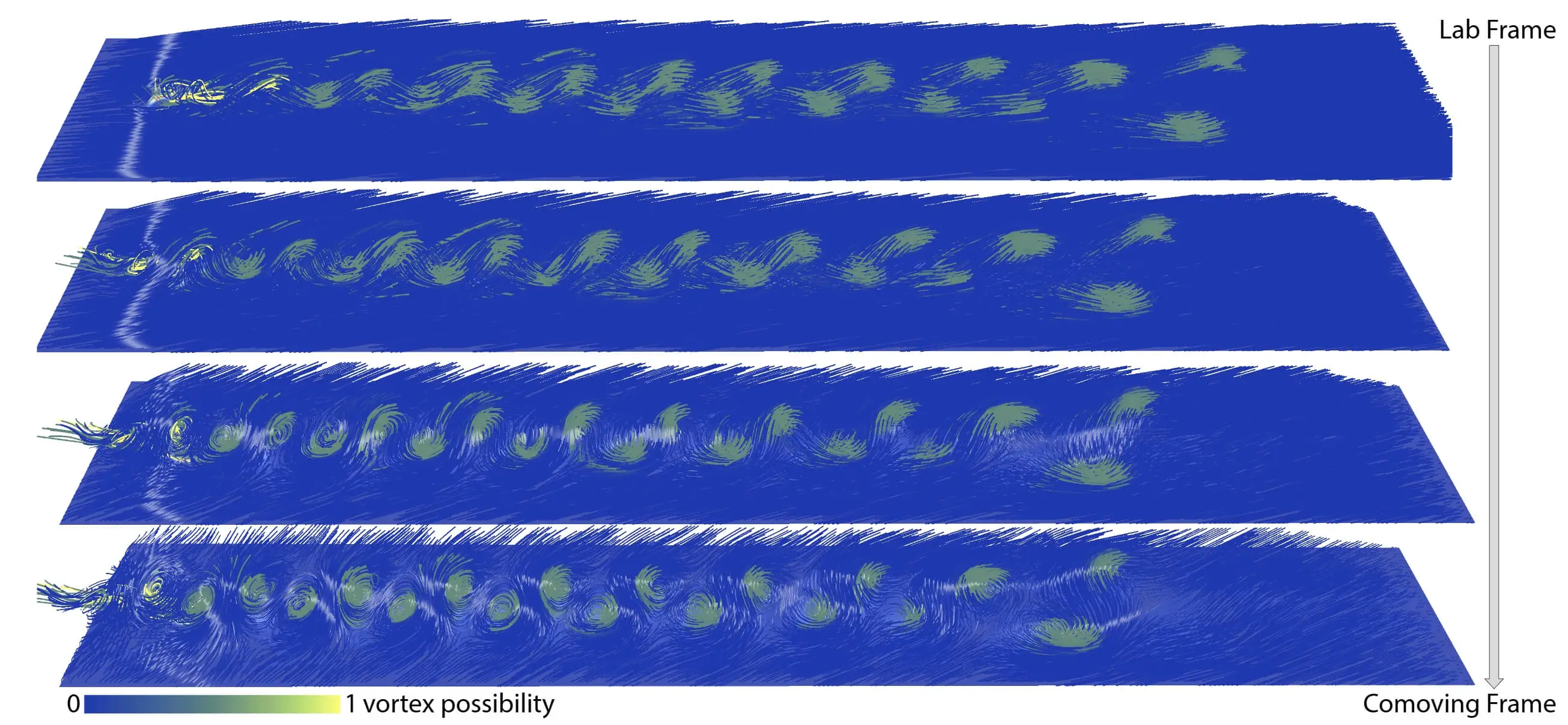
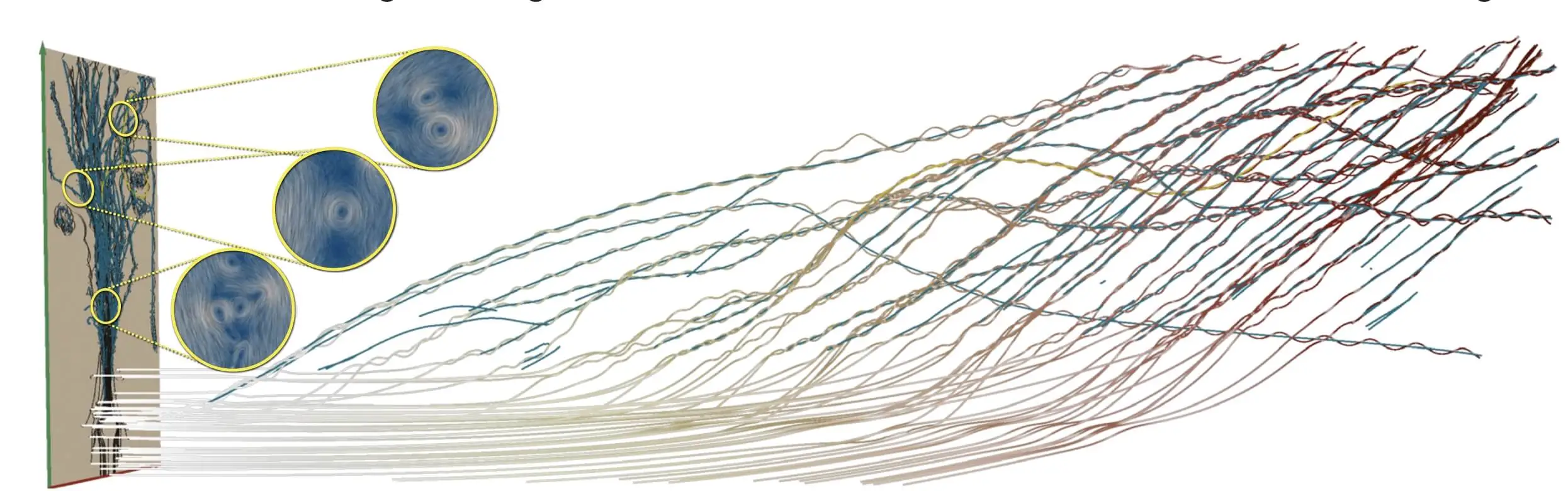
Vortex Lens: Interactive Vortex Core Line Extraction using Observed Line Integral Convolution
Peter Rautek, Xingdi Zhang, Bernhard Woschizka, Thomas Theussl, Markus Hadwiger
IEEE Transactions on Visualization and Computer Graphics (Proceedings IEEE VIS 2023)
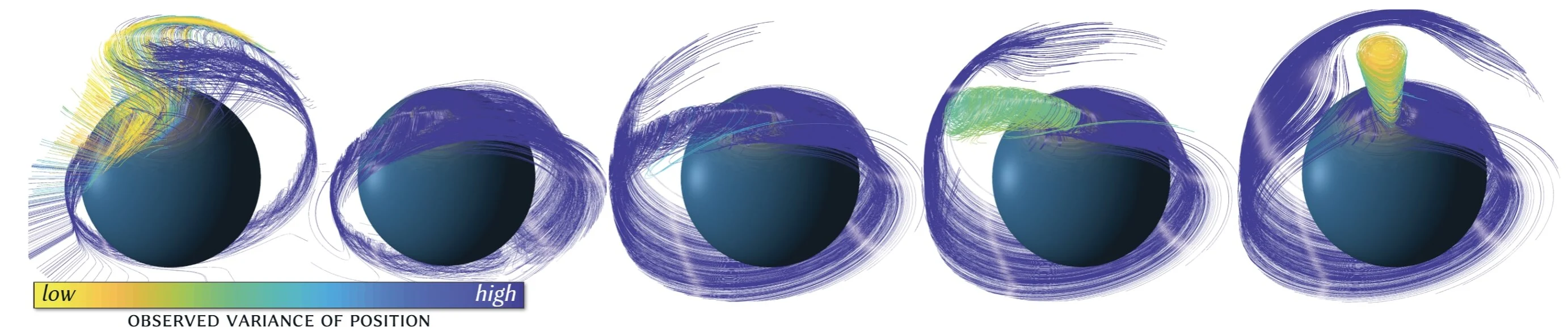
An Interactive Exploration System for Physically-Observable Objective Vortices in Unsteady 2D Flow
Xingdi Zhang
Master's Thesis, King Abdullah University of Science and Technology (KAUST), 2021
I am glad that the thesis was reviewed by a very professional commitee: my supervisor Markus Hadwiger, and professors Helmut Pottmann and Ivan Viola.
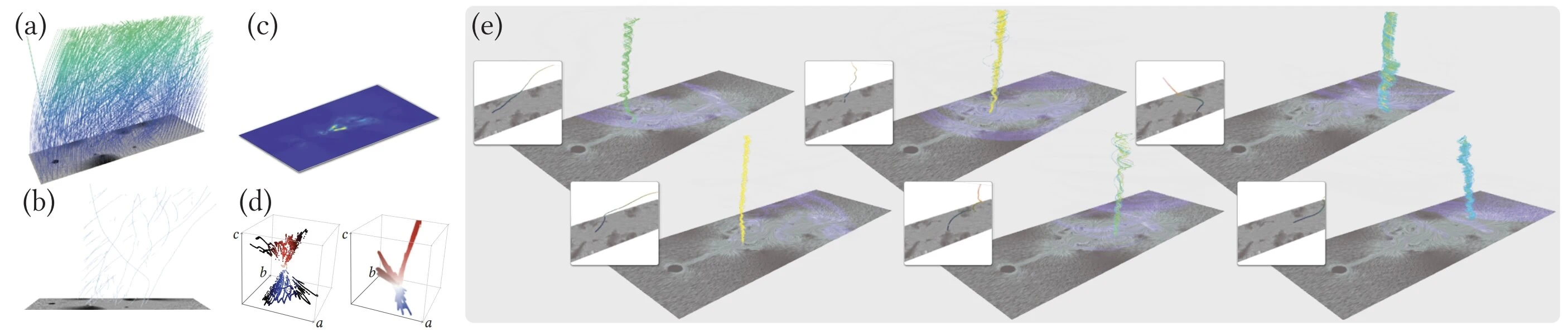
Interactive Exploration of Physically-Observable Objective Vortices in Unsteady 2D Flow
Xingdi Zhang, Markus Hadwiger, Thomas Theußl, Peter Rautek
IEEE Transactions on Visualization and Computer Graphics (Proceedings IEEE VIS 2021)
Dataset
XFLUIDX3D
This dataset contains the flow data used in the following papers:
- Generic Variational Spacetime Optimization of Vortex Core Manifolds
- Exploring 3D Unsteady Flow using 6D Observer Space Interactions
This open-source dataset contains three-dimensional unsteady flow simulation data generated using the Lattice Boltzmann Method (LBM). The collection is designed to support research in flow visualization, vortex analysis, and interactive exploration of complex fluid dynamics.
The dataset includes three canonical aerodynamic configurations. Because of the 50GB limit of Zenodo, we split the dataset into different volumes. You should go to the correct volume to find the flow data you want:
- BOEING_747 (Volume 1)
- DELTAWing (Volume 1)
- F22RAPTOR (Re = 400,000) (Volume 2)
All simulations were performed with consistent numerical settings to enable comparative studies of vortex dynamics, flow separation, and unsteady wake structures.
VortexTransformer-Fitted Vatistas Velocity Profile
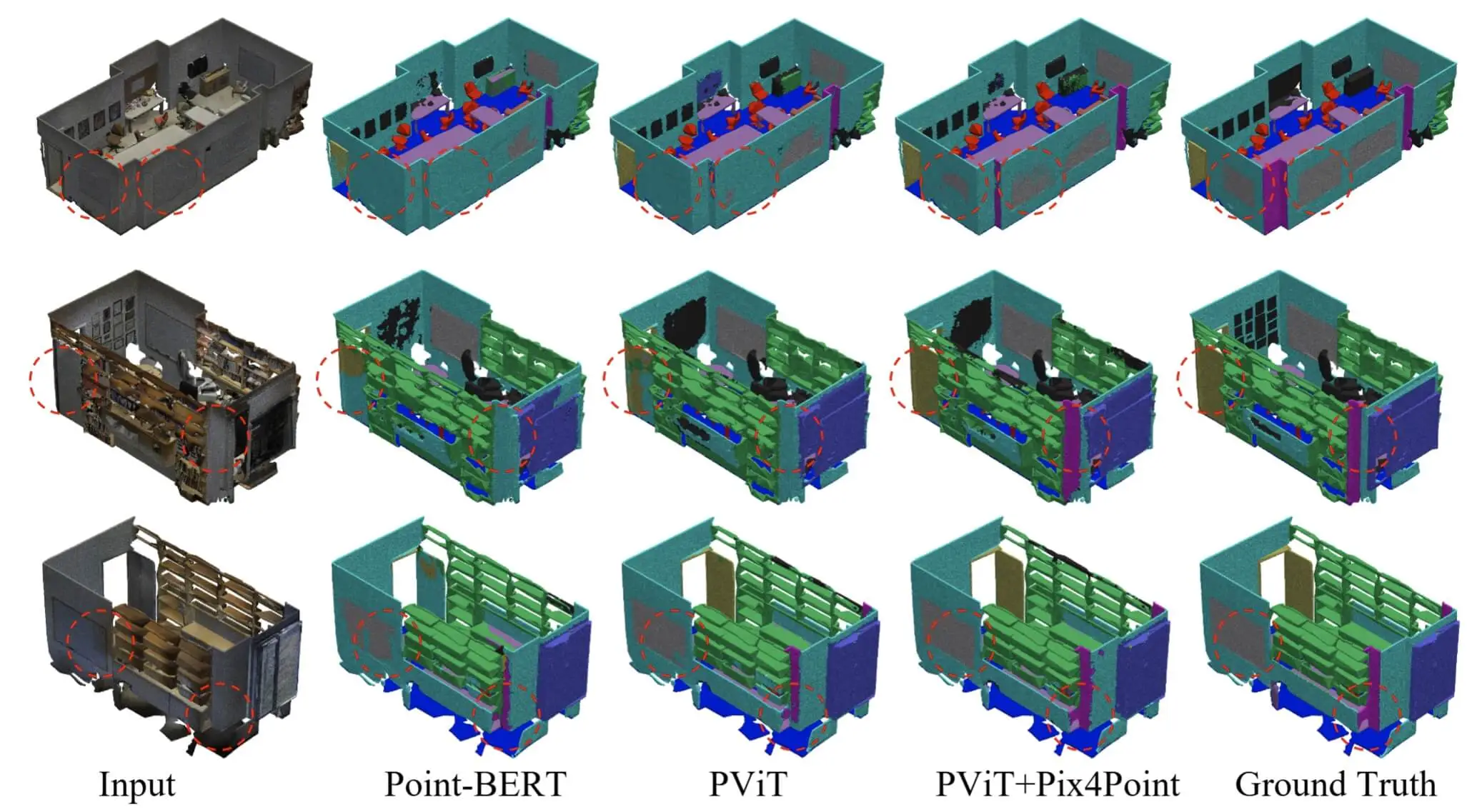
This dataset contains the training and validation data used in VortexTransformer: End-to-End Objective Vortex Detection in 2D Unsteady Flow Using Transformers.
Flow-field patches from several benchmark 2D flow datasets were fitted with parametrized Vatistas vortex models using simulated annealing and gradient-based optimization. The fitted parameters provide analytically defined vortex-core labels for learning-based vortex segmentation, including the noise-based augmentations described in the paper.
Source flows include cylinder2d, Heated Cylinder with Boussinesq, Rotation Four Center, beads_WeinkaufTheisel2010, pipecylinder2d, and doublegyre2d.
Honors and Awards
- EuroVis Best PhD Award (the only two recipients of the 2026 EuroVis Annual Award for Best PhD Thesis)
- Honorable Mention Best Paper, IEEE VIS 2025
- Best Paper Award, IEEE VIS 2023
- Honorable Mention Best Paper, IEEE VIS 2021
- KAUST CEMSE Dean's List Award (for academic achievements), 2024/2025
- KAUST CEMSE Dean's List Award (for academic achievements), 2021/2022
- National Scholarship of China (The Highest-Level Scholarship Funded by Chinese Government, Rate Top 0.1% Within China), 2018/2019
Projects
PyFlowVis
CUDA-accelerated high-performance framework (hybrid C++/Python/CUDA) for real-time observer relative flow visualization.
- Compute: CUDA kernels for pathlines/flowmap/FTLE/Reference Freame Optimization; CPU fallback via numba and C++ (PyBind).
- Rendering: PyOpenGL backend for efficient real-time visualization.
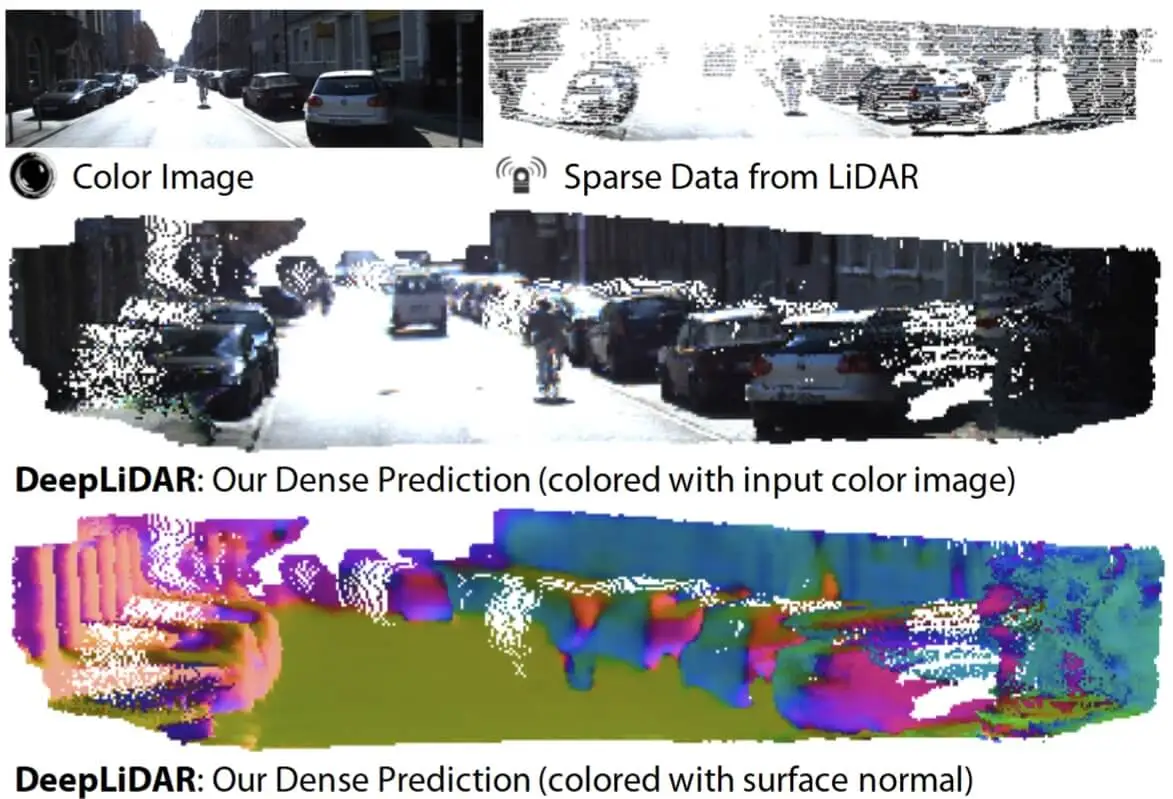
Surface Normal ToolKit
Code for preprocessing Lidar data for paper Deep Surface Normal Guided Depth Prediction for Outdoor Secene from Sparce Lidar Data and Single Color Image.
A Method for Synthesizing High Dynamic Range Images
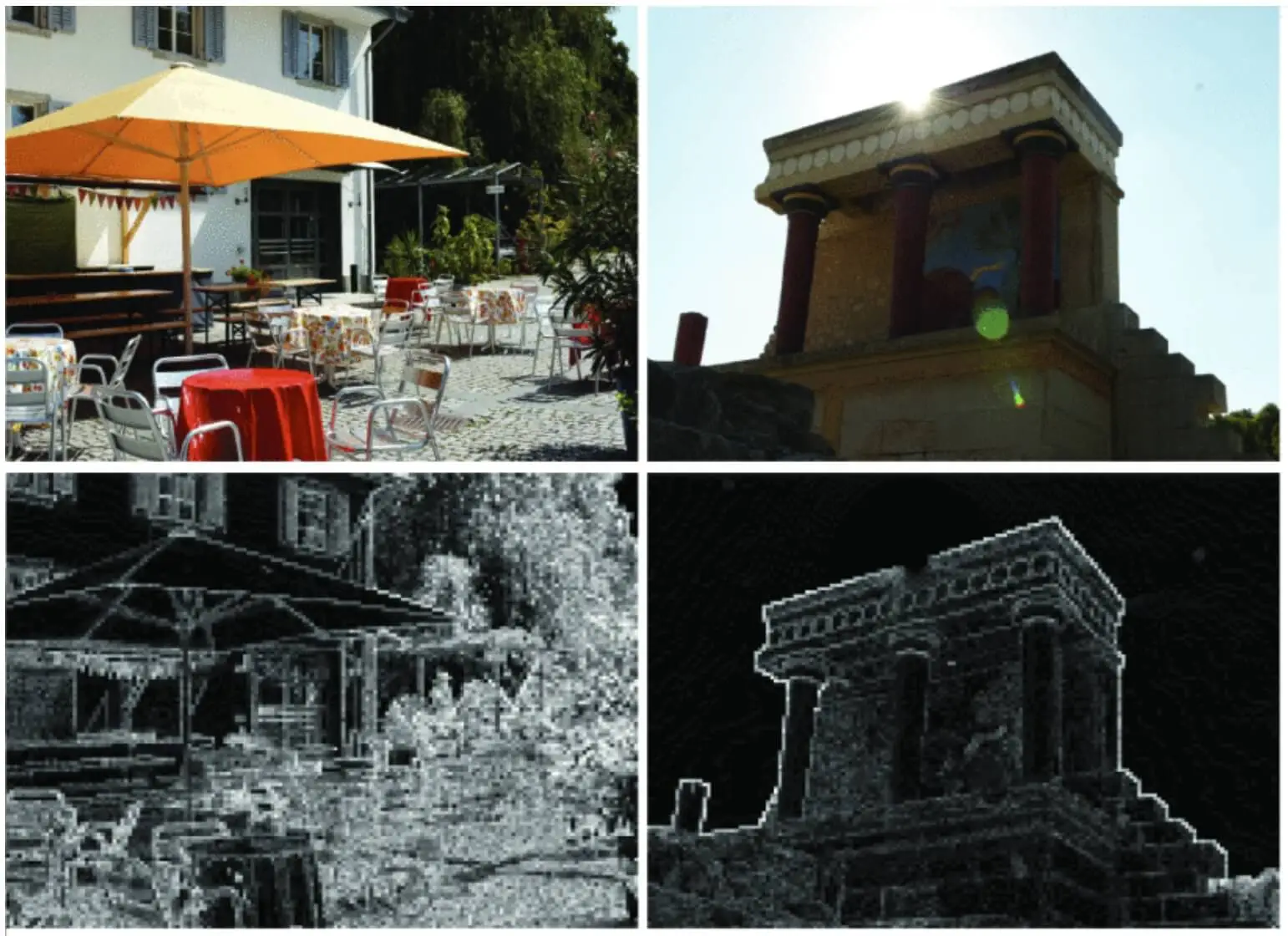
Chinese Patent CN108717690B - A method for synthesizing high dynamic range images using JPEG compression intermediate products as guidance for synthesis coding information.
Service
Journal Reviewer:
- Computers & Graphics, 2022
- TVCG, 2026
Conference Reviewer:
- IEEE VIS, 2025, 2026
- EuroVis, 2025, 2026
- SIGGRAPH, 2026
- ICLR, 2026
Teaching Assistant: Data Science and Visual Analytics using javascript & D3.
2023Teaching Assistant:CS 380 - GPU and GPGPU Programming
2025Volunteer Engineer: Vcc Open week (VR experience for flow visualization)
2021